RankReady
Guides and comparisons for the RankReady plugin and AI SEO on WordPress, including how it runs next to Yoast, Rank Math and AIOSEO.
Meta-ExternalAgent: What Meta’s Crawler Does on Your Site
Meta runs five crawlers with different jobs, and two may bypass robots.txt. What each does, the documented user agents, and demo log…
AI Readiness Audit for Agencies: Add It to Care Plans
How agencies can package an AI readiness audit as an add-on to a care plan: what it covers, how long it takes,…
Author Markup for AI: Getting Person Schema Right on a WordPress Blog
Person schema tells a machine who wrote a post. The fields, the common faults and the checks, built on Google's guidance on…
Bytespider and CCBot: Block or Allow on WordPress?
Bytespider and CCBot differ in who runs them and how verifiable they are. What each says about itself, the disputed evidence, and…
llms-full.txt: what it is, who defines it, and when to serve it
llms-full.txt is a single-file copy of a site's content that some sites serve next to llms.txt. What it is, where it comes…
PetalBot on WordPress: Why It Hits Your Site and How to Block It
PetalBot is Huawei Petal Search's crawler. What it is, its documented user agents, how to verify it, what blocking costs, and demo…
Google removed FAQ rich results. What to do with your FAQ schema
Google no longer shows FAQ rich results in Search. What that means for FAQPage markup on WordPress, and what to keep.
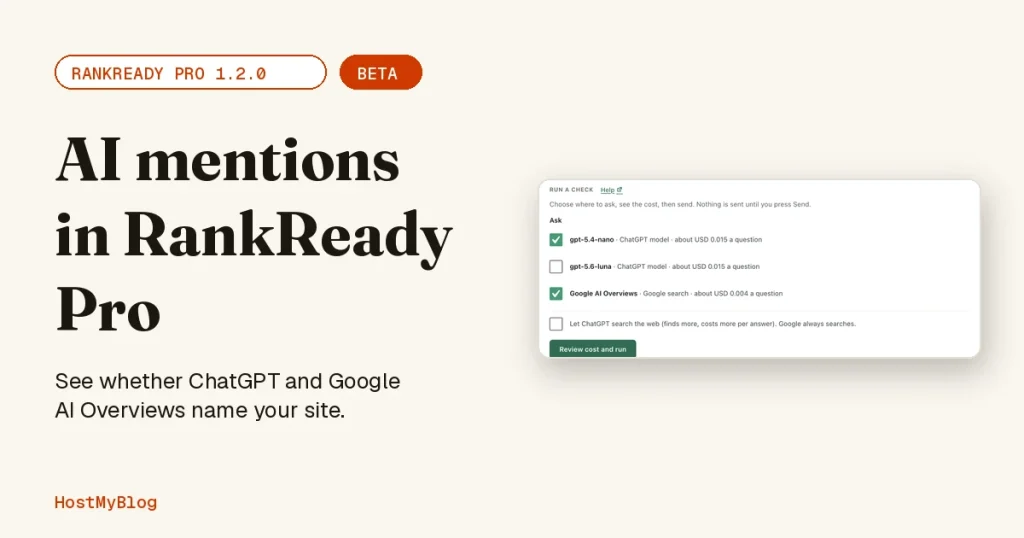
RankReady Pro 1.2.0 adds AI mentions (beta), and the Black Friday offer is live
RankReady Pro 1.2.0 adds AI mentions (beta): ask ChatGPT models and Google AI Overviews your customers' questions and see if the answer…
ClaudeBot: What It Crawls and Whether to Block It
ClaudeBot is Anthropic's training crawler, and it is one of three Anthropic bots. What each does, what blocking costs, and how to…
AI Search for Recipe Bloggers: Six Checks That Matter
Six checks for recipe bloggers in AI search: crawler access, recipe in the HTML, complete recipe markup, quotable writing, fresh content and…
Be easy for AI to read.
Field notes from the team that runs blogs for a living, so your posts are easy for Google and AI crawlers to read. Written for businesses, bloggers and agencies. No spam, no 14-email “sequence”, just the good stuff.